
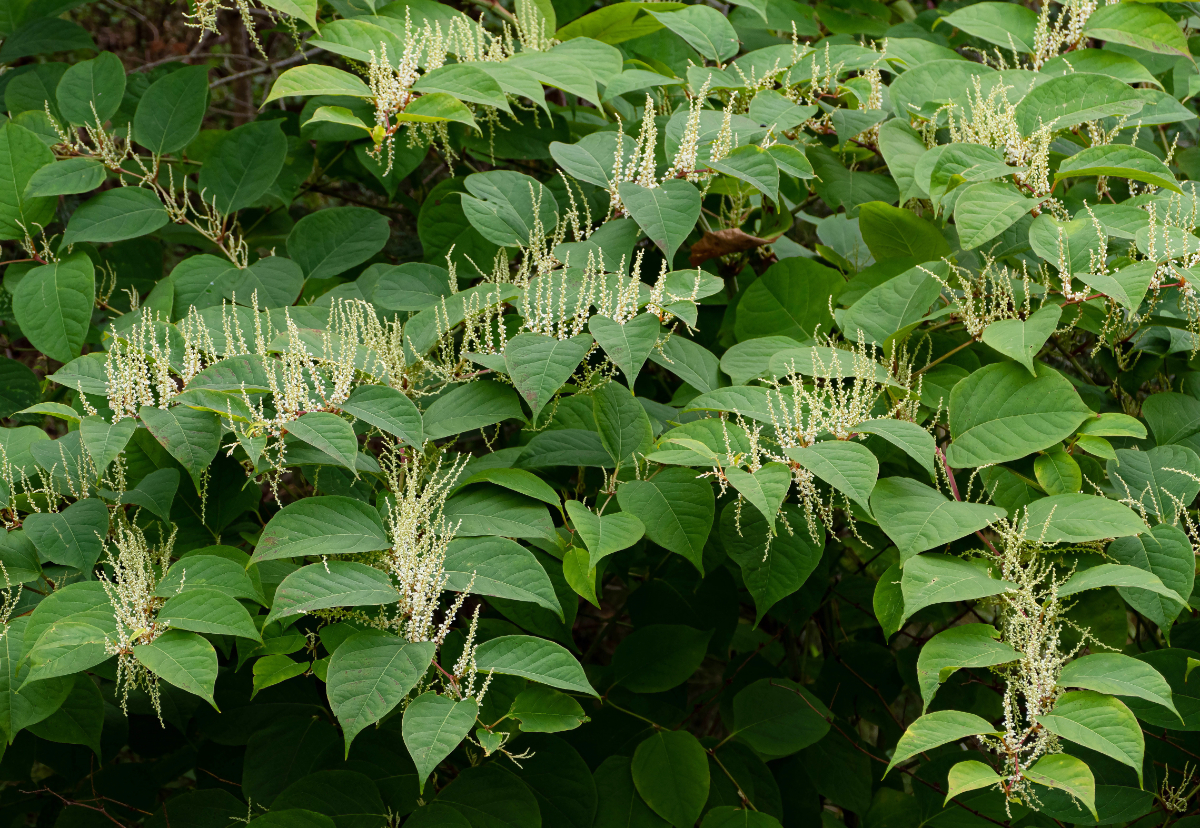
What does Japanese knotweed do to humans? Find out whether Japanese knotweed is poisonous, whether it is dangerous to touch and which precautions should be taken when it is found on your property. Japanese knotweed is mainly known for the problems it creates for land, buildings, gardens and natural habitats. Its rapid growth and underground rhizome system can make it difficult to control.
Unlike giant hogweed, Japanese knotweed is not generally treated as a plant that causes serious burns or poisoning through normal skin contact. However, this does not mean that an unidentified plant should be handled carelessly.
The greatest risks to people usually come from misidentification, unsuitable treatment methods, contaminated plant material, unsafe excavation work and the financial or legal problems caused by an unmanaged infestation.
Is Japanese Knotweed poisonous?
Japanese knotweed is not generally considered poisonous to humans through normal contact. Touching its leaves or stems is not known to cause the severe burns associated with giant hogweed. However, people should still avoid handling an unidentified invasive plant with bare hands.
Other plants may look similar, and treated Japanese knotweed may have herbicide residue on its leaves and stems.
Wearing gloves, long sleeves and suitable footwear can help protect against:
- Scratches from mature canes
- Contact with herbicide residue
- Soil containing sharp objects
- Ticks and insects living around dense growth
- Contact with other plants growing nearby
- Accidental movement of plant fragments
Hands should be washed after working near any invasive plant. Clothing, footwear and tools should also be checked for soil and plant fragments before leaving the area.
Can Japanese Knotweed Cause Skin Irritation?
Japanese knotweed is not known for causing serious skin reactions.
However, individual people may react differently to plant material, pollen, soil or chemicals used during treatment. Mature canes may also have rough or broken edges that can scratch exposed skin.
Anyone who develops a rash, swelling, breathing difficulty or another unexpected reaction after handling a plant should wash the affected area and seek suitable medical advice.
Can Japanese Knotweed Burn Your Skin?
Japanese knotweed is not known to cause the severe light-sensitive skin burns associated with giant hogweed.
Giant hogweed contains sap that can make skin highly sensitive to sunlight. Contact may lead to painful blistering and, in serious cases, lasting skin damage.
Japanese knotweed and giant hogweed do not look the same when fully grown, but people who are unsure about the plant should not touch it.
Professional identification is the safest option.
Is Japanese Knotweed dangerous?
Japanese knotweed is not normally a direct physical danger to people. The plant does not attack, sting or release dangerous sap in the same way as some harmful species.
However, it can create indirect risks when it is allowed to spread or is managed incorrectly.
These risks may include:
- Obstructed paths and access points
- Hidden uneven ground
- Damaged or lifted paving
- Restricted access to drains and boundaries
- Unsafe dead canes during winter
- Accidental spread during cutting or digging
- Exposure to incorrectly used herbicides
- Delays to building or landscaping work
- Disputes with neighbouring landowners
- Costs connected with surveys and treatment
Dense growth may also hide holes, rubbish, damaged surfaces and other hazards. Care should be taken when entering an area that has been covered by Japanese knotweed.
Is Japanese Knotweed harmful to humans?
Japanese knotweed is not usually harmful to people simply because it is growing nearby. It does not release dangerous fumes or make a home unsafe to occupy.
A person can normally remain in a property where Japanese knotweed has been identified. The affected area should be left undisturbed until the plant has been assessed and a suitable plan has been prepared.
The plant becomes more concerning when people:
- Dig through the affected soil
- Cut or strim the canes
- Move contaminated material
- Use herbicides without following instructions
- Burn plant material unsafely
- Walk through unstable or overgrown land
- Mistake another harmful plant for Japanese knotweed
The main response should be careful management rather than panic.
Can Japanese Knotweed Affect Mental Wellbeing?
Finding Japanese knotweed can be stressful, particularly when a property is being sold, purchased or developed. Homeowners may worry about treatment costs, mortgage requirements, neighbouring properties and future building plans. Misleading claims about the plant can increase this worry.
A professional survey can help by confirming:
- Whether the plant is Japanese knotweed
- The size of the affected area
- Whether nearby structures are affected
- The recommended treatment
- How long management may take
- Whether building work can continue
- What records may be needed for a sale
Clear information can make the problem easier to manage and prevent unnecessary decisions based on fear.
Can You Eat Japanese Knotweed?
Young Japanese knotweed shoots have sometimes been used as food. However, this does not mean that people should collect or eat plants found beside roads, rivers, railway land, commercial sites or private property.
There are several reasons to avoid eating wild Japanese knotweed:
- The plant may have been treated with herbicide.
- It may be growing in polluted or contaminated soil.
- It may have been incorrectly identified.
- Harvesting it may scatter viable plant fragments.
- Taking it from land without permission may be unlawful.
- Moving the cut material may spread the infestation.
- Individual health conditions may make it unsuitable.
A person should never eat Japanese knotweed unless the plant has been identified correctly and its treatment and growing history are known. Children should not be encouraged to eat any unidentified plant.
Is Foraging Japanese Knotweed Illegal?
It is not automatically a criminal offence merely to pick Japanese knotweed. However, a person must have the landowner’s permission to take plant material from private land.
The more serious concern is spreading the plant.
Japanese knotweed spreads through rhizome growth and viable pieces of stem or rhizome. A new plant can develop from a rhizome fragment as small as one centimetre. Cutting, carrying or discarding the material carelessly may therefore create a new infestation.
Japanese knotweed is listed under Schedule 9 of the Wildlife and Countryside Act 1981. It is an offence to plant it or otherwise cause it to grow in the wild.
Foraging should not involve:
- Digging up crowns or rhizomes
- Carrying loose fragments between sites
- Dropping cut stems
- Discarding material in the countryside
- Taking plants from land without permission
- Entering railway or restricted land
- Harvesting plants that may have been sprayed
Avoiding foraging is the safest choice where the plant forms part of a known infestation or treatment programme.
Is Japanese Knotweed Poisonous to Children?
Japanese knotweed is not generally classed as a poisonous contact plant. However, children should not be allowed to play in or around an infestation.
Dense growth may hide sharp objects, unstable ground, water, holes or damaged paving. Dry winter canes can also snap and form sharp edges.
Children may unknowingly break, carry or drop pieces of the plant. This could spread it to another part of the garden.
Keep children away from Japanese knotweed that:
- Has been treated with herbicide
- Is growing near water
- Covers unsafe ground
- Is close to building work
- Has recently been cut
- Is awaiting removalIs stored as controlled waste
Herbicide instructions should always be followed, including any limits on access after treatment.
Is Japanese Knotweed Poisonous to Pets?
Japanese knotweed is not widely regarded as a highly poisonous plant for dogs and cats. However, pets should not be encouraged to eat or disturb it.
Reliable information about the effects of animals eating different quantities is limited. A pet may also experience stomach upset after eating unfamiliar plant material.
There may be other risks if the plant:
- Has been treated with herbicide
- Is growing in contaminated soil
- Has been mistaken for another species
- Is surrounded by harmful plants
- Contains sharp or mature canes
- Is growing beside water or unstable ground
Contact a veterinary professional if a pet becomes unwell after eating any unknown plant.
Can Pets Spread Japanese Knotweed?
Pets are not likely to spread Japanese knotweed through seeds In the United Kingdom, the plant mainly spreads through rhizomes and viable plant fragments.
However, dogs and other animals may carry contaminated soil or fragments on their paws and coats. They may also disturb soft ground or break young stems while moving through an infestation.
Owners can reduce the risk by:
- Keeping pets away from affected areas
- Using a temporary barrier
- Checking paws after outdoor activity
- Avoiding walks through cut plant material
- Preventing digging near the infestation
- Following any access advice given after herbicide treatment
Is Japanese Knotweed Poisonous to Livestock?
Japanese knotweed is not generally listed as a poisonous grazing plant in the same way as ragwort. However, livestock should not be used as the main method of controlling it.
Animals may eat young growth, but this will not normally kill the underground rhizome system. Grazing may also disturb the soil or move plant fragments around the land.
Older canes become hard and woody. Broken canes may have sharp edges that could cause minor injuries around an animal’s mouth or legs.
Japanese knotweed growing on agricultural land should be assessed as part of a planned control programme. The landowner should also consider:
- Whether herbicide has been applied
- Whether animals must be kept away during treatment
- The risk of fragments being carried to other fields
- Access for treatment equipment
- Nearby ditches and watercourses
- Storage and disposal of cut material
A veterinary professional should be contacted if livestock appear unwell after eating an unidentified plant.
Can Japanese Knotweed Cause Allergies?
Japanese knotweed is not widely known as a major cause of serious allergies. However, pollen, dust, mould, soil and other nearby plants may affect sensitive people.
Someone working in a dense infestation may be exposed to:
- Airborne dust
- Pollen from several plant species
- Mould on dead vegetation
- Insects
- Herbicide spray
- Soil particles
Suitable clothing and protective equipment should be used where required. Herbicide users must follow the product label and relevant safety rules. People with asthma, serious allergies or skin conditions should avoid unnecessary contact with unidentified vegetation.
Is It Safe to Cut Japanese Knotweed?
Cutting Japanese knotweed is not usually dangerous because of poison. The concern is that cutting may spread the plant and create controlled waste.
Strimmers, mowers and flails can break stems into small pieces and scatter them across the site. Fragments may then be moved by shoes, animals, vehicles, tools or water.
Do not strim or mow Japanese knotweed as part of ordinary garden maintenance. Cutting may sometimes form part of a planned treatment programme, but the material must be collected, stored and managed correctly.
Any tool used near the plant should be:
- Inspected after use
- Cleared of soil
- Cleared of plant fragments
- Cleaned in a controlled area
- Kept away from unaffected ground until clean
Is It Safe to Dig Up Japanese Knotweed?
Digging Japanese knotweed without a suitable plan can make the infestation worse. The plant has an underground network of rhizomes.
Digging may break this network into smaller pieces and spread them through the surrounding soil. Excavation can also create large amounts of contaminated material that must be stored, treated or disposed of correctly.
Professional excavation may be appropriate when:
- Construction work cannot be delayed
- The affected soil must be removed
- A driveway or extension is planned
- The infestation is in a confined area
- Herbicide treatment would take too long
- A root barrier or burial cell is required
The excavation area should be controlled to prevent machinery from carrying contaminated soil onto clean ground.
Is Japanese Knotweed Herbicide Dangerous to Humans?
Approved herbicides can be used to control Japanese knotweed, but they must be applied according to the product label and current rules.
The risk comes from the chemical product and the way it is used, rather than from the Japanese knotweed itself. Treatment should take account of:
- The approved use of the product
- The correct application rate
- Weather conditions
- Nearby people and animals
- Watercourses
- Protected areas
- Personal protective equipment
- Storage of chemicals
- Access after spraying
Government guidance states that only approved herbicides should be used. Treatment usually requires repeated applications and commonly takes at least three years.
Permission may also be needed when working near water or on protected land. People and pets should be kept away for any period stated on the herbicide label or advised by the contractor.
What Should You Do After Touching Japanese Knotweed?
Normal contact with untreated Japanese knotweed does not usually require emergency action.
After touching it:
1. Wash your hands with soap and water.
2. Check your clothing for plant fragments.
3. Clean soil from your footwear in the affected area.
4. Do not brush fragments onto clean ground.
5. Wash any scratches.
6. Follow medical advice if an unusual reaction develops.
Where the plant may have been treated, avoid touching your face or eating until your hands have been washed. The contractor or landowner should be able to confirm whether herbicide has recently been used.
What Should You Do if Sap Gets on Your Skin?
Japanese knotweed sap is not associated with the serious light-sensitive burns caused by giant hogweed.
However, wash the area with soap and water if sap or crushed plant material gets onto your skin. Remove contaminated clothing and avoid further contact if irritation develops.
Seek medical advice if you experience:
- Persistent redness
- Swelling
- Blistering
- Breathing difficulty
- Eye irritation
- A widespread rash
Severe blistering may suggest that the plant was not Japanese knotweed and should be investigated.
Japanese Knotweed and Giant Hogweed
Japanese knotweed and giant hogweed are both invasive plants, but they present different concerns.
Japanese Knotweed
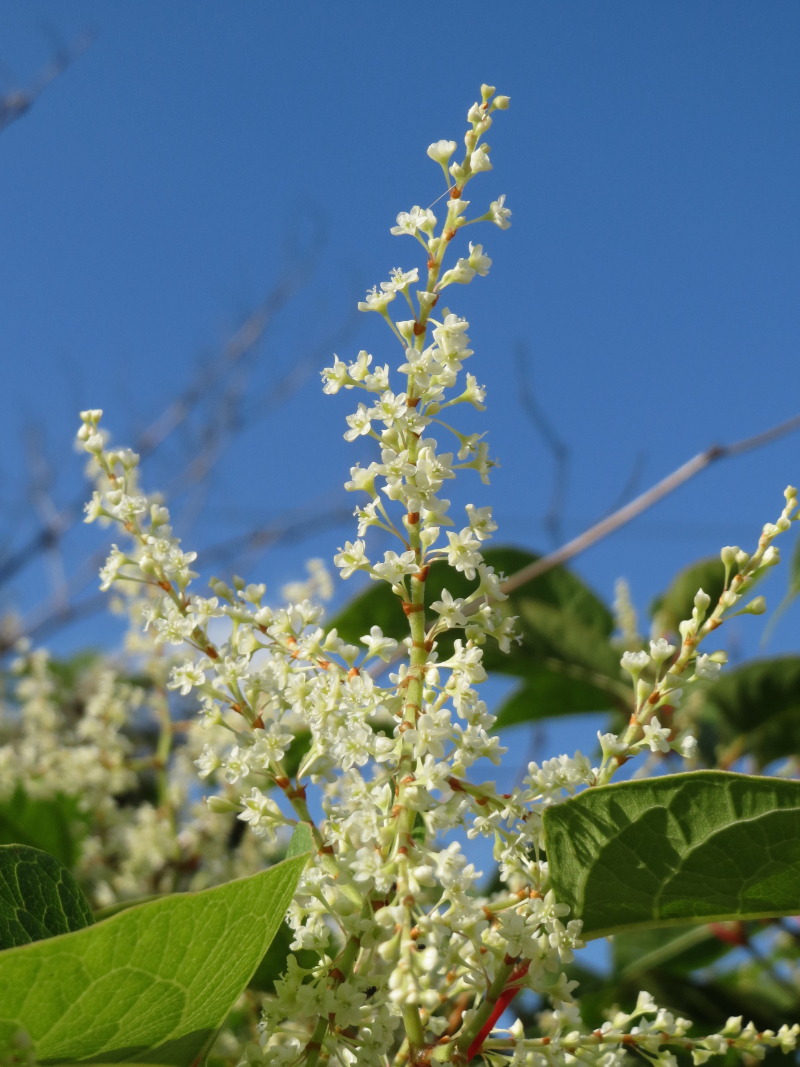
Japanese knotweed usually has:
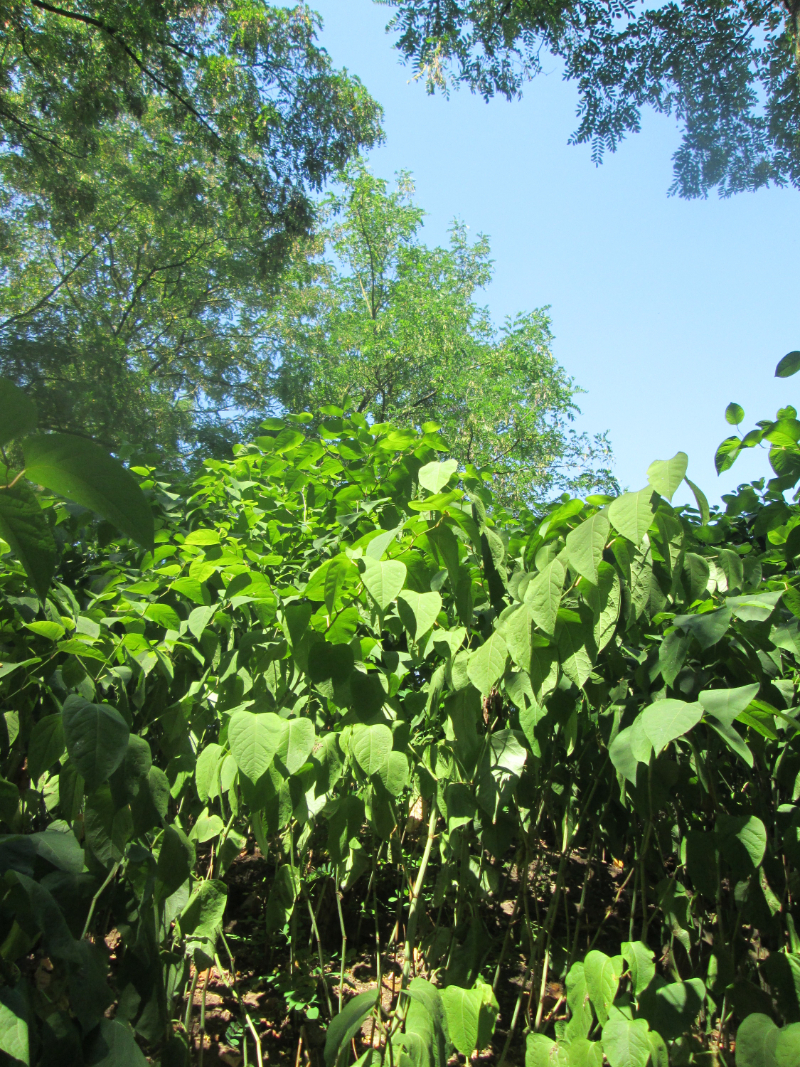
- Upright bamboo-like canes
- Purple or red speckles
- Shield-shaped leaves
- A zigzag stem arrangement
- Small cream flowers
- Dense clumps of growth
Its main risks relate to spreading, land management, property use and the environment.
Giant Hogweed
Giant hogweed usually has:
- Very large divided leaves
- Thick, bristly stems
- Purple blotches
- Large white umbrella-shaped flowers
- A much broader and taller appearance
Its sap can cause serious skin damage when affected skin is exposed to sunlight.
Do not touch either plant when identification is uncertain. Photographs can be sent to a specialist for an initial opinion, followed by an inspection where needed.
Why Is Japanese Knotweed Considered Dangerous?
Japanese knotweed is considered a serious invasive plant because it can spread from small fragments, form dense growth and remain alive beneath the ground for many years.
It can affect:
- Native plants and habitats
- Riverbanks and waterways
- Paths and access routes
- Building and landscaping plans
- Paving and damaged structures
- Property sales
- Mortgage applications
- Neighbouring land
- Waste handling
- Development costs
Its danger is therefore mainly environmental, practical and financial rather than toxic.
Damage to Native Habitats
Japanese knotweed can form thick stands that block light and compete with native plants for space. This may reduce the variety of vegetation in an affected area.
In turn, insects and animals may lose some of the plants they use for food and shelter.
Riverbank Problems
Japanese knotweed commonly grows beside rivers and streams. During summer, dense growth may restrict access.
During winter, the visible canes die back and may leave the soil more exposed to erosion. Plant fragments may also be carried downstream and establish new growth elsewhere.
Property and Building Concerns
Japanese knotweed does not normally break through strong, undamaged concrete.
However, it can exploit cracks, joints and weak areas in paving, walls and drainage systems. The plant may also prevent an owner from using or developing part of a garden while treatment is taking place.
Financial Concerns
Costs may include:
- A specialist survey
- A treatment plan
- Herbicide visits
- Excavation
- Waste transport
- Authorised disposal
- Root barrier installation
- Repairs to surfaces
- Ongoing monitoring
- Guarantee cover
The effect will depend on the size, location and condition of the infestation.
Is It Illegal to Have Japanese Knotweed?
It is not illegal simply to have Japanese knotweed growing on your property. In England, a landowner does not automatically have to remove it unless it is causing a nuisance.
However, the landowner must prevent it from spreading beyond the property. A person may be prosecuted for causing Japanese knotweed to grow in the wild.
Allowing it to spread onto neighbouring land may also lead to a civil claim. The rules and official guidance may differ across England, Wales, Scotland and Northern Ireland. The guidance that applies to the location of the property should always be checked.
Can Japanese Knotweed Spread to a Neighbour’s Property?
Yes. Rhizomes can grow beneath boundaries, while contaminated soil and plant fragments may be moved above the ground.
A landowner who knows about an infestation should take reasonable steps to control it.
Useful actions include:
- Recording the location of the growth
- Taking dated photographs
- Arranging professional identification
- Preparing a management plan
- Monitoring the boundary
- Keeping treatment records
- Communicating with the neighbouring owner
Do not enter neighbouring land or apply herbicide there without permission.
Is Japanese Knotweed Controlled Waste?
Japanese knotweed material and contaminated soil may be classed as controlled waste when they are removed from the place where they were growing.
It should not be placed in:
- An ordinary household bin
- A garden waste bin
- Home compost
- A roadside pile
- Woodland
- A public recycling centre that does not accept it
-Another property
If the waste is removed from the site, it must be taken by a registered waste carrier to a facility authorised to accept it.
Current guidance for England states that material which cannot be managed on its site of origin should be sent to a landfill or incineration facility with the correct permit. A management plan is also required for covered on-site treatment and disposal activities.
Does Japanese Knotweed Have to Be Burned?
No. Burning is not the only method of dealing with Japanese knotweed.
Depending on the site and current environmental rules, possible methods may include:
- Herbicide treatment
- Excavation and off-site disposal
- On-site burial
- Cell burial
- Controlled drying
- Permitted incineration
- Combined treatment methods
Burning must not be treated as a simple household solution. Local restrictions, environmental rules and fire safety requirements must be followed. Rhizomes and crowns may not be completely destroyed by an unsuitable fire.
How to Remove Japanese Knotweed Safely
The correct removal method depends on the size of the infestation, its location and the future use of the land.
Professional Survey
A survey identifies the plant, maps the visible growth and examines the surrounding area.
The survey should consider:
- Nearby buildings
- Drains and services
- Property boundaries
- Watercourses
- Planned construction
- Access for machinery
- Signs of previous treatment
- Possible growth on adjoining land
Herbicide Treatment
Herbicide treatment is often suitable where the land does not need to be cleared immediately.
The treatment may involve spraying the leaves or injecting individual stems. Repeat visits are normally required because one application is unlikely to control the whole rhizome system. Government guidance says treatment usually takes at least three years, and dormant rhizomes may grow again if the soil is disturbed.
Excavation
Excavation may be used where an area must be cleared for development.
Affected soil is removed under controlled conditions.
The machinery, storage area and vehicle routes must be managed to prevent plant fragments from reaching clean parts of the site.
Off-Site Disposal
Contaminated material may be taken to a suitably authorised landfill or incineration facility.
The receiving site should confirm that it can accept the waste before transport takes place.
The material should be contained during the journey, and the carrier must hold the required registration.
On-Site Burial
Some sites have enough suitable space to bury contaminated material under controlled conditions.
This requires a detailed plan and must comply with current environmental requirements.
The burial position should be recorded for future owners and contractors.
Root Barriers
A root barrier may help prevent rhizomes from crossing a boundary or reaching a protected area.
It must be designed and installed correctly.
A barrier is often used alongside other treatment rather than as a complete solution by itself.
Can You Remove Japanese Knotweed Yourself?
A property owner may be able to manage a small infestation, but mistakes can spread the plant and create waste problems.
Do-it-yourself treatment is not usually recommended where:
- A property is being sold
- A mortgage is involved
- Building work is planned
- The plant is near a boundary
- The infestation is near water
- Contaminated soil must be moved
- Several areas are affected
- Herbicide use requires specialist knowledge
- A written guarantee is needed
Government guidance advises against treating Japanese knotweed without the required skills and experience. Professional treatment also creates a clear record of the work completed.
How to Prevent Accidental Spread
Japanese knotweed is often spread by people rather than through natural seed production.
To reduce the risk:
- Do not strim or mow it.
- Do not dig through the affected soil.
- Do not place it in garden waste.
- Keep vehicles away from the area.
- Clean tools and machinery carefully.
- Store cut material on a controlled surface.
- Keep pets away.
- Tell contractors before work begins.
- Do not move soil to another property.
- Follow the written management plan.
Small rhizome fragments can produce new plants, so even minor soil movement should be taken seriously.
What to Do if You Find Japanese Knotweed
Do not begin cutting or digging as soon as you notice suspected growth. Take the following steps:
- Keep the area undisturbed.
- Take clear photographs.
- Record the location.
- Check the surrounding boundaries.
- Keep children and pets away.
- Ask whether herbicide has previously been used.
- Arrange professional identification.
- Obtain a written treatment plan.
- Tell builders or gardeners working nearby.
- Keep all reports and treatment records.
Early identification can reduce accidental spread and make future treatment easier to plan.
Frequently Asked Questions
Can Japanese Knotweed Kill You?
Japanese knotweed is not generally considered a deadly or highly poisonous plant. Its main risks relate to invasive growth, unsafe treatment and accidental spread.
Is Japanese Knotweed Safe to Touch?
Normal contact is not known to cause the serious burns associated with giant hogweed. Gloves and suitable clothing are still sensible, especially when identification or previous herbicide use is uncertain.
Should I Go to Hospital After Touching It?
Normal contact does not usually require hospital treatment. Wash your skin and seek medical advice if you develop a serious or unexpected reaction.
Can Japanese Knotweed Make Dogs Ill?
Japanese knotweed is not widely treated as highly poisonous to dogs, but pets should not be encouraged to eat it. Contact a veterinary professional if a dog becomes unwell after eating an unknown plant.
Can Children Play Near Japanese Knotweed?
Children should be kept away from an infestation. The area may contain sharp canes, hidden hazards, herbicide residue or plant fragments that could be spread around the garden.
Can I Eat Japanese Knotweed From My Garden?
Eating it is not recommended unless the plant has been correctly identified and you know that it has not been treated or exposed to contamination. Harvesting may also spread viable material.
Does Japanese Knotweed Spread Through Seeds?
In the United Kingdom, Japanese knotweed mainly spreads through rhizomes and viable fragments of stem or rhizome rather than seeds.
Can I Put Japanese Knotweed in My Garden Bin?
No. Removed Japanese knotweed should not be placed in an ordinary garden waste or household bin.
Is It Illegal to Cut Japanese Knotweed?
Cutting it is not automatically illegal, but causing it to spread into the wild may be an offence. The resulting plant material must also be managed correctly.
Do I Have to Remove Japanese Knotweed?
In England, you do not automatically have to remove it simply because it is present. You must prevent it from spreading off your property, and action may be needed if it is causing a nuisance.
How Long Does Treatment Take?
Herbicide treatment commonly takes at least three years. Further monitoring may be needed because dormant rhizomes can produce new growth later.
Should Japanese Knotweed Be Professionally Identified?
Professional identification is recommended when the plant affects a property sale, planned development, boundary, mortgage application or treatment decision.
Do you have a Japanese Knotweed problem? If you require Japanese Knotweed Removal in Essex or throughout the UK, contact our expert today.